Find out everything you need to know about moving to Iceland, from the immigration process to cultural habits, benefits, and challenges, in this guide. Since 2016, over 10,000 people a year have decided to move to Iceland from other countries. If you’re planning a move, this is a must-read.
Why move to Iceland?
It’s no wonder Iceland is often considered one of the most desirable places to live on the planet. The natural beauty here is majestic, dramatic, and sublime, with an abundance of untouched wilderness and geological wonders. Life in Iceland is deeply connected to nature and the elements.
The locals are friendly, welcoming, and open, speak fluent English, and enjoy the company of their foreign guests, no matter how long they stay. Furthermore, Reykjavik, as the capital, is a typical and charming, bustling urban center that effortlessly maintains a small-town atmosphere, a relaxed pace of life, and a commitment to social progress and culture.
And the icing on the cake? After the 2008 financial crisis, Iceland’s economy not only recovered but flourished beyond anyone’s expectations. Unlike the rest of the world, Iceland defied expectations.
He allowed his three largest banks—and the bankers who came with them—to fail and end up in jail. The country also introduced strict capital controls, austerity measures, and financial reforms.
This dire economic situation allowed Iceland’s financial sector to rebuild. He laid the foundations for a national economy that saved the country and set it on a bright and prosperous path.
And what does this future look like? Every year, more and more visitors come to experience Icelandic life for themselves. This small island nation makes a big international impression.
Since the financial crisis, Iceland has become a European hub for culture, travel, and adventure. With such a huge influx of visitors, it seems natural that many would be so captivated by the country that they would consider moving there themselves.
And with such charming national qualities, it’s easy to see why Iceland might seem like a new promised land, an ice-covered paradise located above the Arctic Circle.
Living and working in Iceland as a foreigner
Many who moved to Iceland have not regretted the decision. Those who embrace this change will find life in Iceland open, welcoming, and diverse. It develops at a more relaxed pace than other countries, leaving more room for reflection, observation, and self-development.
Many find the island’s small population—around 340,000 people—a surprising bonus. Iceland’s relatively small size provides a foundation for community life, naturally ensuring fairness and acceptance. It’s quite different from the competitive pressures of living in a country with a population of millions or even billions.
This doesn’t mean life in Iceland isn’t fraught with challenges. Some may find the fish-based diet a bit unappealing, the brand selection often unsatisfactory, and the winter months long, cold, and dark (psychologically, of course).
However, for the most part, the good outweighs the bad, and Iceland will feel more and more like home with each passing day.
For those interested in making the leap themselves, here’s the most accessible and comprehensive guide to moving and living in Iceland, including aspects of life less widely covered by other expat guides.
It’s time to pack your bags. A whole new world and a whole new life await you. How to live in Iceland depends on your legal status and practical needs.
How to move to Iceland
So, you’ve decided to live in Iceland. Now it’s time to explore the immigration process. This will help answer the question: “Can I move to Iceland?”
First steps: Icelandic residence and work permits
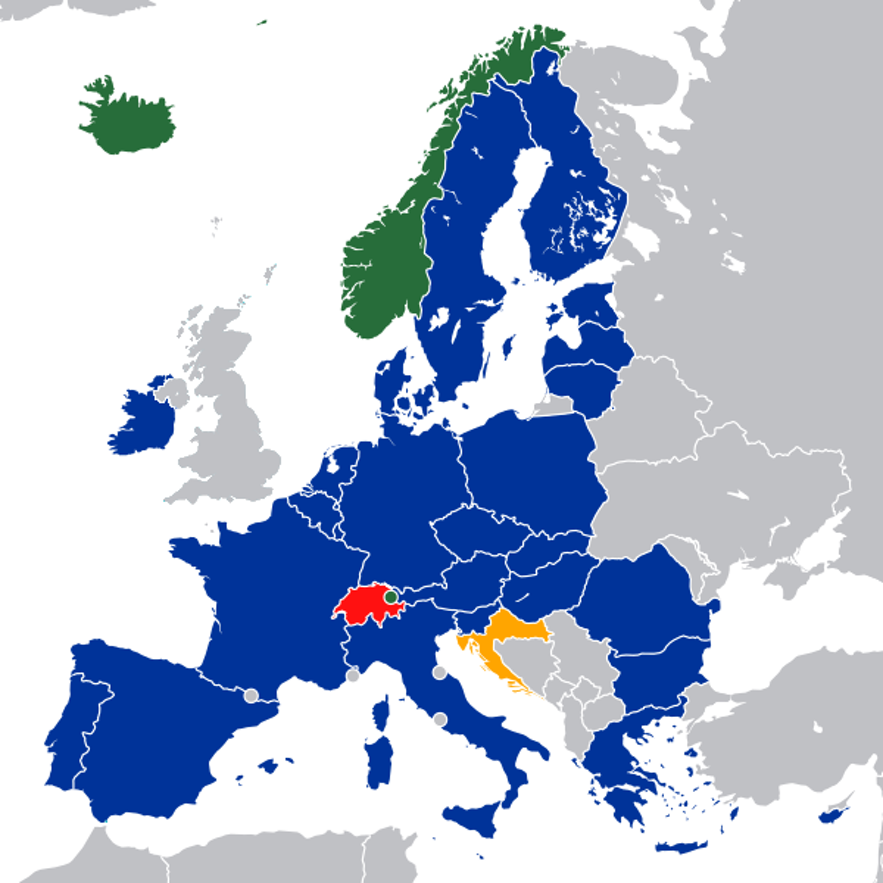
The map above shows the countries of the European Union (in blue) and the countries of the European Economic Area (in green). An important factor when moving to Iceland is whether your home country belongs to one of these institutions.
Can EU citizens live in Iceland?
Fortunately, citizens of the EU, EEA, or EFTA (European Free Trade Association) who intend to live and work in Iceland can enter the country without special permits. They are allowed to work legally in the country for up to three months before they need to register their legal residence. This is a great excuse to book an extended trip in advance, if only to cover the time!
This initial stay may be extended to six months for those seeking work after arrival.
However, after three months of work, a tax card must be obtained. Those intending to reside long-term in Iceland must complete the “Registration of a Foreign Citizen of the EEA or EFTA” form. This form serves as an application for an identification number and registration of your legal residence in Iceland.
You can apply directly to EURES (the European Job Mobility Portal) or the Multicultural and Information Centre for those who cannot provide the relevant certificates. You register your legal place of residence in the National Register and must be able to demonstrate in your application that you can support yourself financially.
Moving to Iceland from the US, UK and other non-EU countries
If you’re not an EEA or EFTA citizen and want to apply for long-term residence in Iceland, the process is notoriously more complicated, but not impossible. There are three main options:
First, you can marry an Icelander, gaining the right to live in your spouse’s country. This option requires a pragmatic approach to love, but it’s not beyond the realm of possibility.
Second, you can use a student visa and enroll in an Icelandic university. This route is popular among young people. It can give you the advantage of studying, a purpose, and making new friends upon arrival. However, enrolling in a Master’s program in anthropology just because you want to move to Iceland doesn’t seem like the wisest decision. On the other hand, higher education in Iceland is excellent, so why not continue to improve?
The third way to obtain a residence permit is to obtain a work permit. Naturally, this is easier said than done. In reality, the process is a series of bureaucratic leaps and bounds, helplessly intertwined with Article 12 of the Aliens Act.
The Directorate of Immigration processes all applications for cards and residence permits in Iceland, as well as any requests for identification. Once the Labor Department has issued you an approved work permit, you can begin working.
Please note that you can only apply for a work permit before traveling to Iceland. Once your work and residence permits are approved, you are free to enter the country.
Obtaining a work permit is difficult; laws prioritize Icelanders and EEA citizens over others. Applicants can attempt to overturn this by arriving in the country with specialized skills. Below are three types of work permits available to non-EEA/EFTA citizens:
Skilled workers: Applicants must have a university-level vocational education or a technical qualification approved by Icelandic authorities. The work must be in a permanent area where Icelandic labor shortages exist, and the applicant must demonstrate that they can perform the work better than an Icelander or EEA citizen.
Athletes: Coaches and athletes belonging to sports clubs of the National Olympic and Sports Association of Iceland may be granted work permits.
Temporary worker shortages: Permits may be issued to workers in areas where there is a shortage of Icelandic or EEA workers. These permits are temporary and can only be renewed once. The Directorate of Labor provides a list of temporary employment agencies.
Kennitala is an Icelandic identification number.
A kennitala is an Icelandic personal identification number, much like a social security number, and is required for virtually everything you do in the country. If you want to rent property, get a tax card, borrow books from the library, register with a doctor, open a bank account, buy a phone, connect to the internet, and so on, you’ll need a kennitala!
The Kennitala is a ten-digit number consisting of your date of birth (DDMMYY) and four randomized numbers at the end.
Many other European countries use the kennitala system, but only a few embrace it so broadly, including businesses and government agencies. For example, the University of Iceland uses a national identification system to distinguish its students rather than an internal system.
The Kennitala is also required for banking transactions in Iceland and serves as an alternative to the government census.
Kennitals are maintained by the Icelandic Register, the country’s official civil registry. You can live in Iceland for three months without a kennital, but you will still need one to access certain services.
The application can be submitted individually or by an employer on behalf of the applicant. Please note that obtaining a kennitala is not the same as registering a legal address, but you can usually obtain both simultaneously from Registers Iceland.
Citizens of countries outside the EEA or EFTA cannot apply for an identity card themselves.
For example, if you need identification for health insurance in Iceland, the insurance company will apply on your behalf. They will submit a form with a copy of your passport to the national registry.
Those same citizens who received a national identity card before entering Iceland still have no rights in the country until they are issued a residence permit and register their address as their legal place of residence.