The 2008 financial crisis hit Iceland much harder than most other countries. The government immediately implemented austerity measures, banned international transactions, and embarked on economic reforms.
Protests continued; thousands gathered outside parliament, demanding answers and justice. Many ministers eventually resigned due to the country’s dire economic situation.
The main difference in the country’s response to the collapse was how Iceland dealt with its banks. Iceland’s banks were fully privatized in the first half of this century, thus ushering in an aggressive economic growth strategy, primarily through the acquisition of shares and property outside Iceland.
Unfortunately, their strategy was profoundly flawed, and many international economists declared it “suicidal.” Bankers relied too heavily on debt financing, exorbitant interest rates, and a desire for rapid expansion. As 2008 approached, international markets grew wary of Iceland’s runaway economy.
While most other countries chose to bail out the bankers, Iceland acted honorably and sued them, jailing many of the worst offenders. In many ways, this was the government’s only option; the total cost of the banking system was twenty times the national budget and ten times the country’s GDP.
To make matters worse, 97% of the banking system collapsed within three days. Unlike other countries, bank bailouts were not a viable option. Since the collapse, Iceland’s economy has steadily improved. By 2012, Iceland was considered a successful recovery from the financial meltdown, having enjoyed two full years of economic growth.
This rebound was driven by many factors, the most important of which were the emergency measures adopted in 2008 to mitigate the initial collapse. As of 2020, Iceland continues to strengthen its economy and recently lifted capital controls, making international money transfers much more accessible.
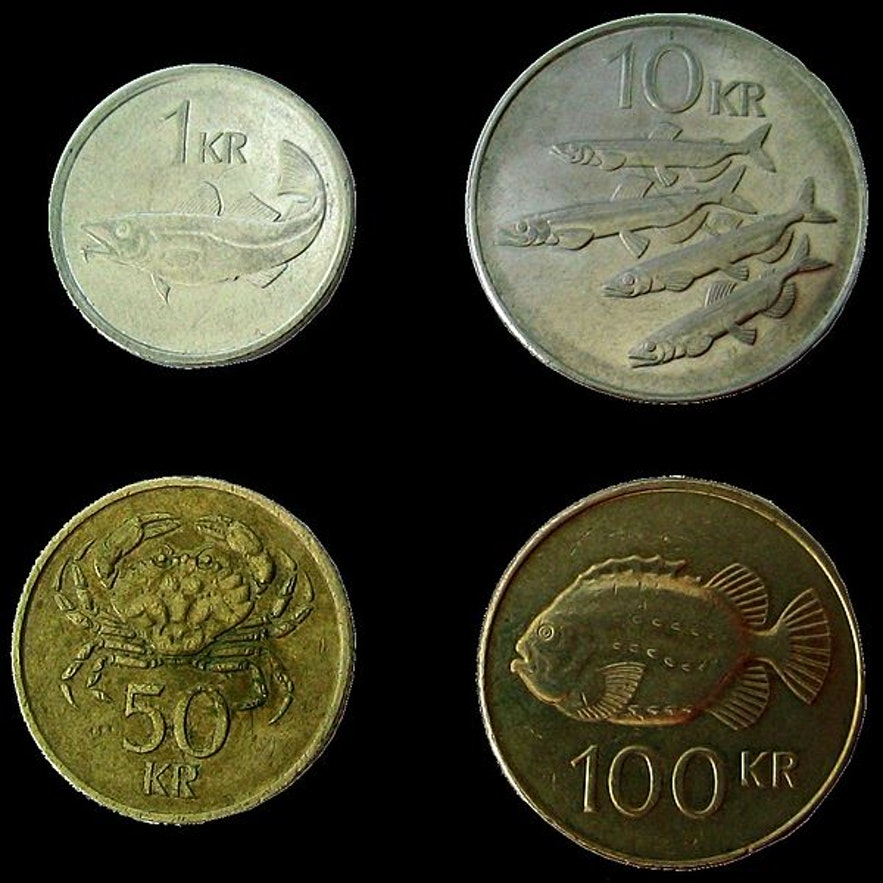
The Icelandic krona is the national currency of Iceland. Banknotes come in denominations of 500, 1,000, 5,000, and 10,000 ISK. Coins come in denominations of 1 (an extremely worthless piece of metal), 5, 10, 50, and 100. With a little saving, it’s easy to become a millionaire in Iceland. Unfortunately, it doesn’t have the same credibility as in other places.
As in other Scandinavian countries, Icelanders typically make all purchases with a debit card.
One of the first things visitors notice about Iceland is the high cost of living. Unfortunately, this is simply the reality of life on a relatively isolated island in the North Atlantic. Imported goods are expensive, and when they finally arrive, the brand selection is minimal. This lack of options can be a shock to British or American visitors accustomed to a wide selection of brands. It’s sometimes described as the worst part of living as an American in Iceland.
The truth is, the cost of living in Iceland is 55% higher than in the US. On average, rent in Iceland is 26% more expensive. To put it simply, Iceland is the fourth most expensive country to live in the world. These statistics are hard to swallow. The minimum financial support for one person to survive in Reykjavik is estimated at $1,600 (208,000 ISK) per month.